DoFAS Inaugurates New Aquaculture Experimental Hatchery
A state-of-the-art closed loop experimental hatchery system is set up at the Fendall Campus to support research on Tilapia breeding and fingerlings genetics.
The Department of Fisheries and Aquaculture Sciences (DoFAS) at the University of Liberia prepares students for careers in fisheries management, aquaculture, fish processing and marketing, research, policy and sustainable aquatic resource management.
BSC Degrees in Liberia
March 10, 2022
Founded to build professional capacity for Liberia's maritime & aquatic resources.
January 25, 2023
Welcomed the inaugural cohort of undergraduate fisheries majors.
BSc. Fisheries & Aquaculture
A comprehensive 4-year Bachelor of Science curriculum.
200+ Students
Active enrollment across major undergraduate course pathways.
Current course curriculum offers specialization tracks in: Fisheries Management • Fish Farming/Aquaculture • Fish Processing & Marketing
The Department of Fisheries and Aquaculture Sciences (DoFAS) was established to build the human resource capacity needed to support Liberia's fisheries, aquaculture, food security and aquatic resource management goals. Through teaching, field-based learning, research and partnership, DoFAS contributes to the sustainable management of marine and inland aquatic ecosystems and supports the preparation of professionals for service in both public and private sector organizations.
DoFAS is housed in its own academic building and continues to grow as a national platform for fisheries and aquaculture education, research and policy engagement.
Aligned with the National Fisheries and Aquaculture Authority (NaFAA) roadmap.
Own fully furnished lecture rooms, labs, and scholar housing facilities.
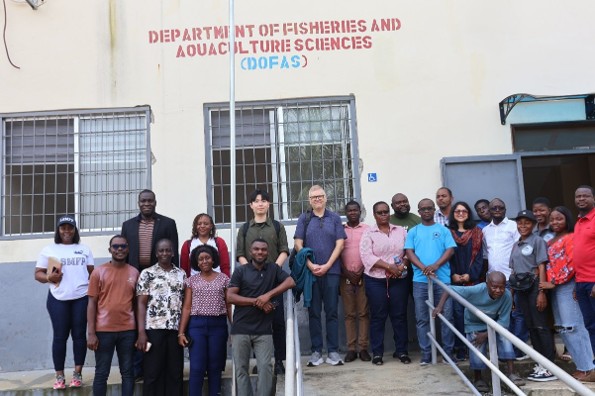
A dedicated group of DoFAS faculty, students, and partners standing proudly in front of the DoFAS department building during the freshman series launch on campus.
DoFAS currently offers a premium full-time undergraduate degree program: Bachelor of Science in Fisheries and Aquaculture. The curriculum is meticulously designed to provide students with the foundational knowledge and extensive practical skills demanded by modern resource sectors.
Prepares students to understand fisheries governance, resource management, monitoring, administration, data use, community engagement, and policy support for sustainable fisheries.
Introduces students to modern aquaculture systems, breeding techniques, fish production, farm management, water quality control, fingerling production, nutrition, and sustainable aquaculture development.
Focuses on post-harvest handling, maintaining fish quality, value addition, product marketing, food safety protocols, cold chain logistics, and the critical economic role of fish products in Liberia's food system.
Admission requirements conform to general University of Liberia scientific standards. We support secondary diplomas.
DoFAS gives students the opportunity to study a field that is central to Liberia's food security, livelihoods, coastal communities and blue economy.
Graduates make high-impact contributions across public administrative offices, local and international non-profits, commercial hatcheries, food processing lines, and regulatory compliance structures.
Our alumni enter sectors like fisheries administration, commercial aquaculture, post-harvest auditing, and coastal environmental policy advisories.
Extensive hands-on training directly at coastal landing sites, processing facilities, and fish farms across Liberia.
Practical education aligned with immediate occupational needs in both public agencies and private aquaculture enterprises.
Contribute to Liberia's long-term blue economy, food security program, and marine resources conservation strategy.
Strong laboratory training covering water chemistry, fish biology, disease diagnostics, and environmental monitoring.
Participate in real-world policy research, biodiversity surveys, and coastal community surveys alongside faculty.
Direct engagement with local fishing communities, international organizations, and government entities such as NaFAA.
Learning at DoFAS extends far beyond standard classrooms. Our students participate in real fisheries observations, vessel inspections, and rural community engagement.
DoFAS student research teams conducting structured socio-ecological and catch surveys at landing docks alongside local Monrovia cooperative fishers.
DoFAS brings together distinguished researchers and instruction experts with deep qualifications across marine economics, tropical aquaculture breeding, climate sciences, and quantitative fish ecology.
| Ref | Name | Title / Qualification | Area of Expertise |
|---|
Could not find any staff matching "" under focus "All". Try adjusting your spelling or choosing "All".
DoFAS supports research and engagement on marine and inland aquatic ecosystems, fisheries resource management, aquaculture, fish processing and marketing, small-scale fisheries, community participation, climate change, aquatic ecology and sustainable development. The Department also contributes to policy-relevant work that can support decision-making for sustainable use of Liberia's marine and freshwater resources.
Conducting systematic monitoring of Liberia's diverse freshwater basins, estuarine mangroves, and coastal shelf to evaluate health, water chemistry, and biological diversity.
Optimizing sustainable artisanal and industrial harvest models while protecting small-scale fishing community livelihoods from overexploitation.
Researching optimal local feed formulations, genetic improvements for Tilapia and Catfish, and closed-loop recirculating systems fits for Liberian rural communities.
Formulating empirical models on sea-level rise and rising water temperatures to provide actionable scientific advisories to Liberia’s government policy planning.
Connect your scientific projects, grant funding pathways, or extension projects directly onto the University of Liberia scientific team.
DoFAS has grown through structured collaboration with the University of Liberia, the National Fisheries and Aquaculture Authority (NaFAA), the Liberia Sustainable Management of Fisheries Project (LSMFP), the World Bank, and other national and international partners.
Recent activities highlight specialized fisheries workshops, policy draft formulations, capacity development, and academic participation in national resource frameworks.
*Partner names displayed in accordance with department branding rules and institutional consent protocols.
Parent Academic Institution hosting the specialized Department.
Liberia's apex regulatory authority and strategic policy sponsor.
National institutional development framework funded by the World Bank.
Primary international funding partner for capital building and training infrastructures.
Global ecological organization assisting in marine and wetland biodiversity mapping.
Providing capacity building, instrument support, and international training connections.
Providing students with premium learning infrastructures is central to DoFAS’s institutional identity. Explore our modern academic building and dedicated residential compounds.
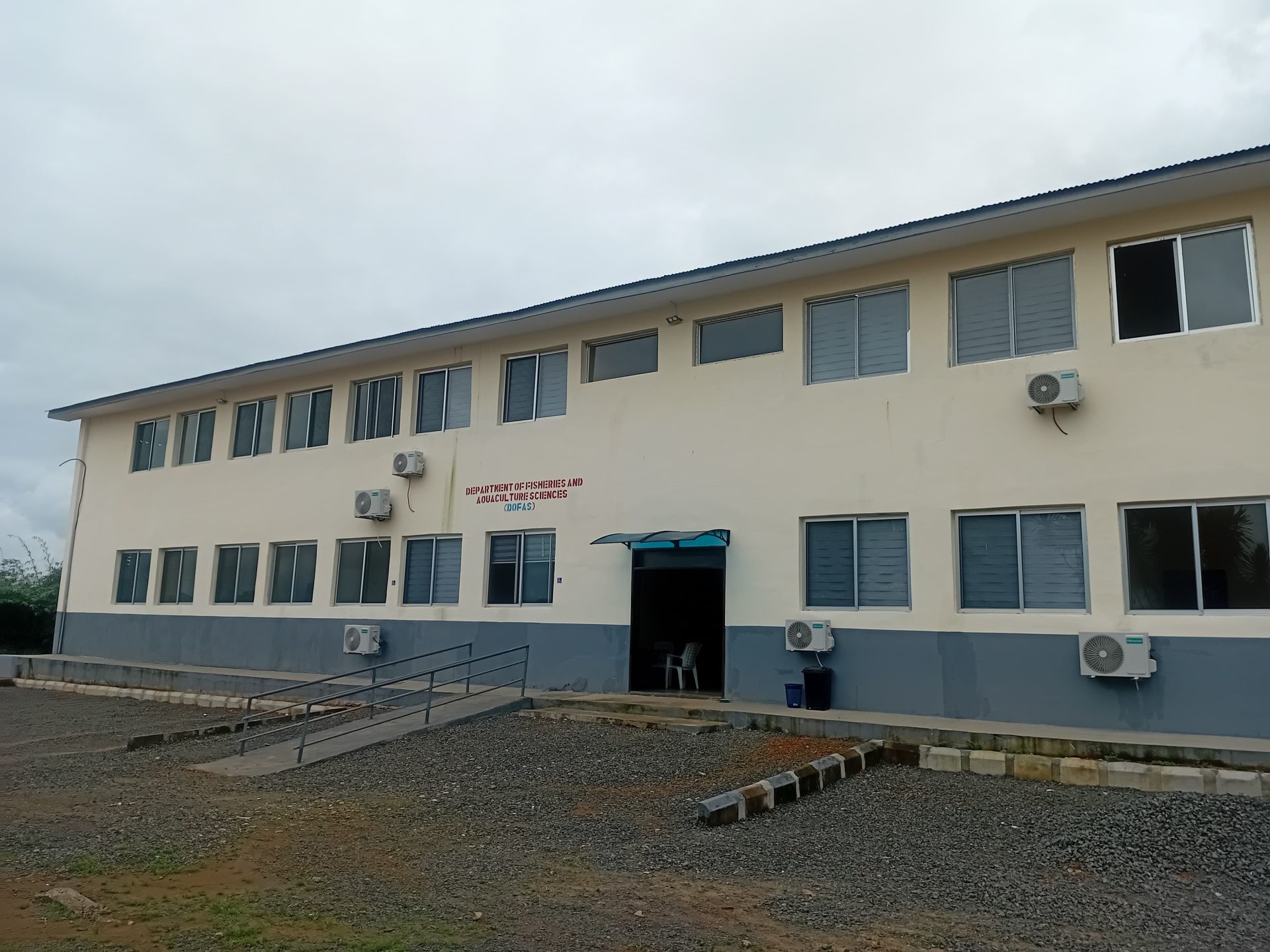
The Department of Fisheries and Aquaculture Sciences (DoFAS) building, housing high-capacity lecture theatres, specialized biology and water chemistry laboratories, and academic advisory offices.
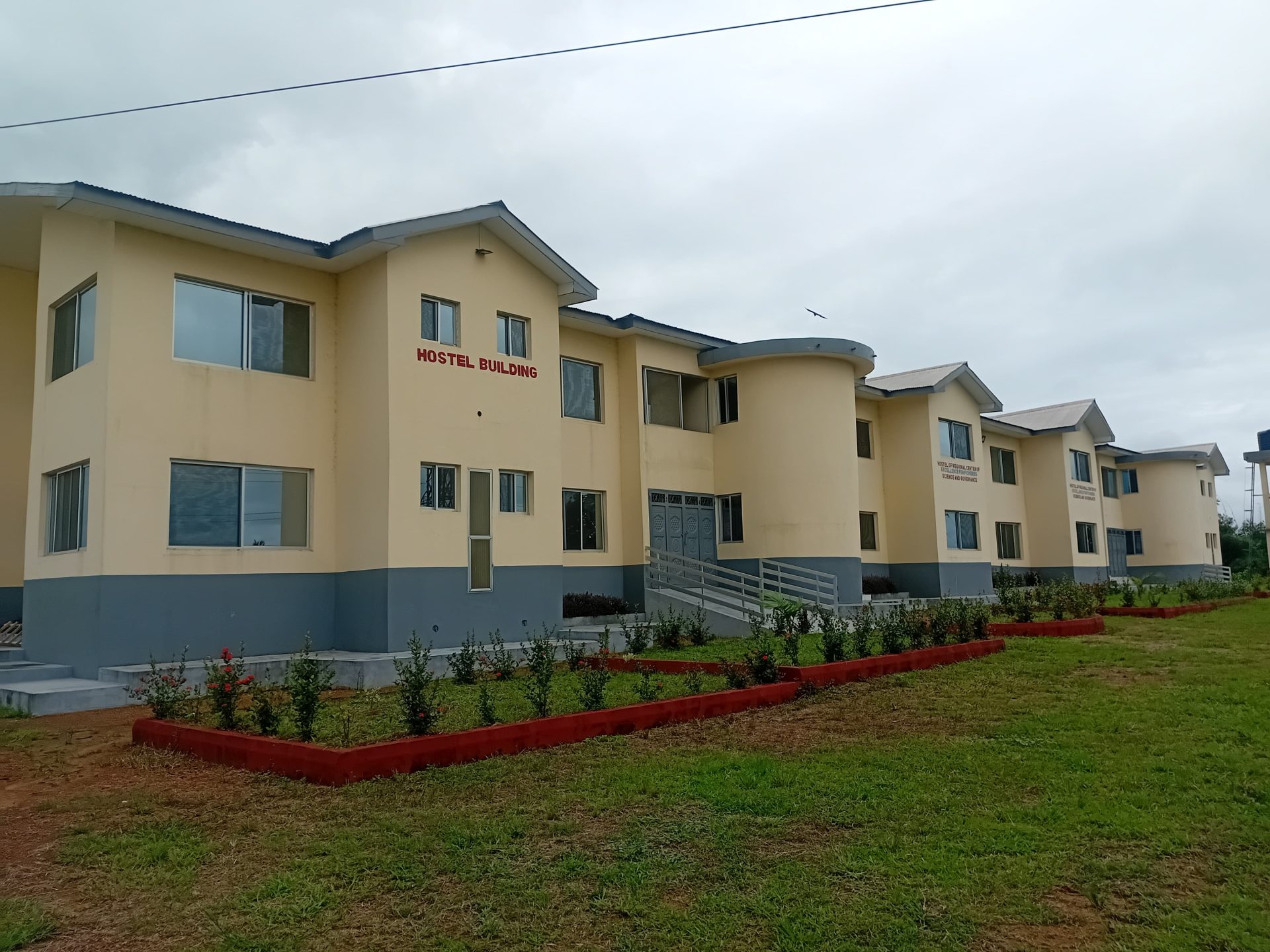
Modern residential dormitories offering secure, comfortable accommodation for domestic and regional students, situated in close proximity to the academic block.
Stay updated with the latest activities, achievements, field programs, and institutional developments from DoFAS.
A state-of-the-art closed loop experimental hatchery system is set up at the Fendall Campus to support research on Tilapia breeding and fingerlings genetics.
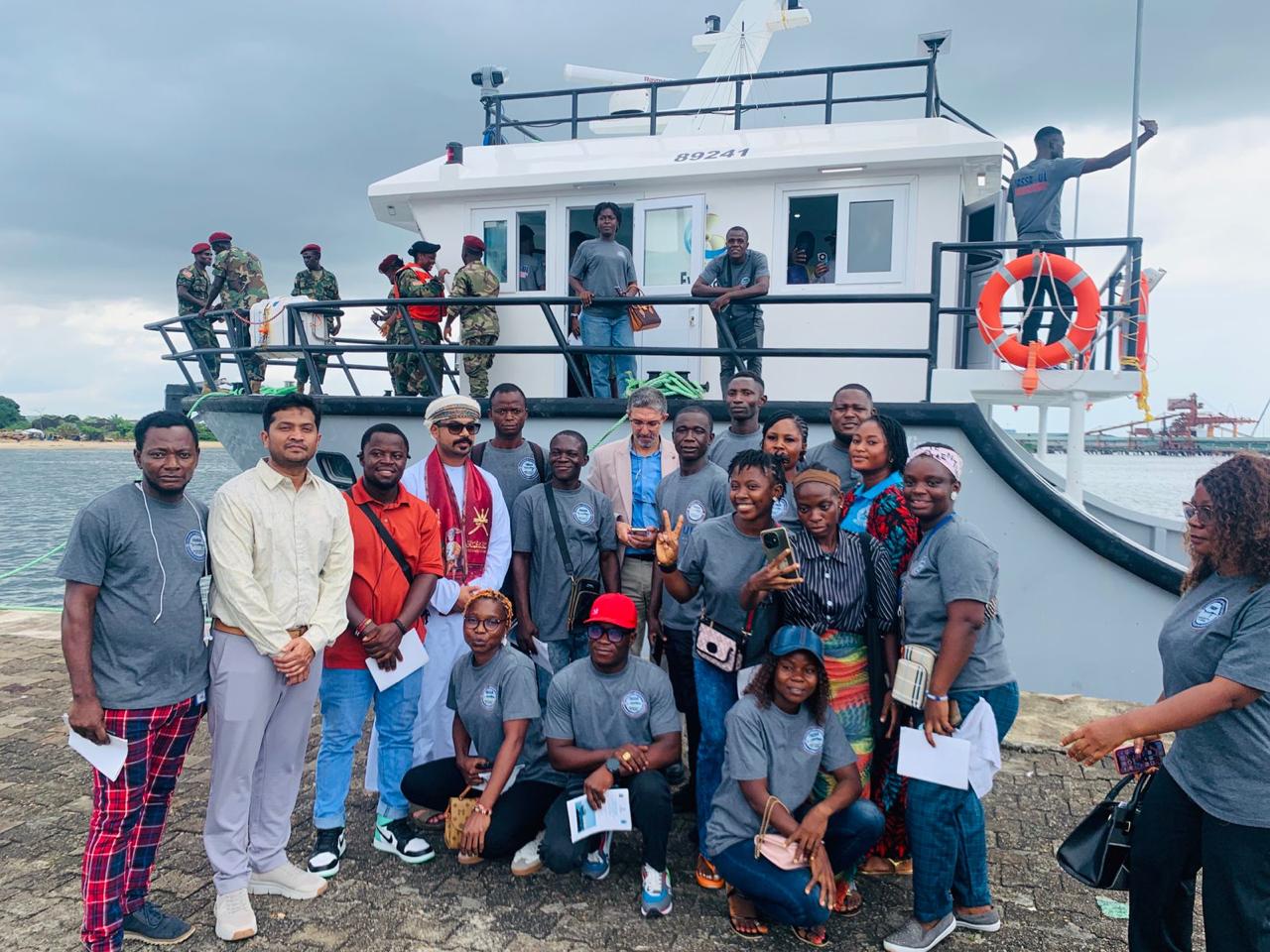
Key international stakeholders inspect the newly acquired laboratory equipment, reading rooms, and the student residential hostels to evaluate research capacity.
Senior undergraduate students conduct socio-ecological surveys and catch volume analysis alongside local artisanal fisheries cooperatives.
Explore available scholarships, grants, research fellowships and internship opportunities for students and researchers in the fisheries and aquaculture sector.
Provides full tuition coverage, academic textbook allowances, and a monthly stipend for outstanding second-year fisheries majors.
Offers funding and mentoring for graduates participating in coastal shelf biomass surveys and mangrove ecosystem limnology studies.
A 3-month paid summer internship program for fisheries governance students in marine biology monitoring and wetland protection sites.
No opportunities found in this category.
Prospective students are welcomed to register inquiries regarding syllabus layouts, tuition rates, or laboratory tours. Sponsoring organizations can submit collaboration proposals below.
Department of Fisheries & Aquaculture Sciences Complex, Fendall Campus, University of Liberia, Monrovia, Liberia
+231-77-111-2222 / +231-88-333-4444
Description