Charles Asumana Sr., BSc., LL.B., MSc., PhD.
Office of the Dean
University of Liberia
P.O Box 10-9020, Fendell Campus
1000 Monrovia, 10 Liberia
West Africa
Contact Information:
+231777417741 (WhatsApp)
0888417741 / 0770042429 (Direct Calls & Texts)
Email: asumanach@ul.edu.lr
The Thomas Jefferson Richelieu Faulkner College of Science & Technology, School of Environmental Studies & Climate Change is one of the University of Liberia’s leading academic units for science, technology, environmental education, research, and innovation.
Established on June 1, 1974, the College is named in honor of Thomas Jefferson Richelieu Faulkner (T.J.R.F.), a professional engineer, industrialist, and distinguished public servant whose service to Liberia spanned approximately four decades. Born in North Carolina in 1869, Faulkner immigrated to Liberia in 1881 and became a pioneering figure in the country’s technological development. He is credited with introducing and installing electricity, telephone services, and an ice factory in Liberia. Known for his patriotism, integrity, and commitment to public service, he also served as Mayor of the City of Monrovia before his death on February 2, 1943.
At its establishment, the College comprised two major divisions: the Natural Science Division, consisting of Biology, Chemistry, Mathematics, and Physics; and the Engineering Division, comprising Civil Engineering, Electrical Engineering, and Geology & Mining Engineering.
Over the years, the University has undergone significant academic expansion and restructuring. Today, the natural sciences and engineering disciplines have evolved into independent, full-fledged colleges, while the College of Science & Technology has experienced remarkable growth and diversification in its academic programs.
The mission and vision of the college are aligned with those of the University of Liberia. One of the world’s oldest colleges, the college’s vision is to transform the way that the world is understood, how knowledge is created, and how problems are approached and solved, including emerging problems. It also provides academic excellence, research, and teaching, ardently cherished and promoted, with an uncompromising devotion to a high premium placed on academic freedom and creative thinking.
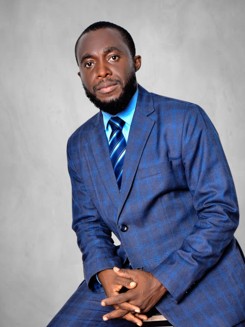
Dr. Atty. Charles Asumana Sr. is an Associate Professor and Dean of the Thomas Jefferson Richelieu Faulkner College of Science & Technology, School of Environmental Studies and Climate Change at the University of Liberia. A scholar, researcher, chemist, lawyer, climate change expert, and academic leader, he has devoted nearly two decades to advancing science, higher education, research, and environmental sustainability in Liberia.
Dr. Asumana’s pursuit of academic excellence began during his formative years at the Lott Carey Baptist Mission School in Brewerville. He emerged as the 2002 WAEC Dux (First Prize Winner) in the Republic of Liberia and was a recipient of the Joseph Jenkins Roberts Educational Foundation Scholarship. In 2006, he earned a Bachelor of Science degree in Chemistry, with a minor in Mathematics, from Cuttington University, graduating with high honors (Magna Cum Laude). He subsequently obtained his Master’s and Doctorate in Chemical Engineering and Technology from Beijing University of Chemical Technology in 2010 and 2013, respectively. As a Distinguished International Student, he received the University’s Academic Star Award, its highest student distinction for international students. He later earned his Bachelor of Laws (LL.B.) with distinction from the Louis Arthur Grimes School of Law, University of Liberia, and was admitted to the Liberian Bar as an Attorney-at-Law.
Before joining the University of Liberia, Dr. Asumana served the United Methodist University (UMU), where he became the founding Dean of the Stephen Trowen Nagbe College of Science and Technology, now known as the College of Natural and Applied Sciences. In that capacity, he successfully led the transformation of UMU’s Science Department into a full-fledged college. At the University of Liberia, he previously served as Academic Director of the Graduate Program of Environmental Studies and Climate Change before assuming his current leadership role as College Dean.
An internationally recognized climate change specialist, Dr. Asumana serves as a Technical Expert Reviewer under the United Nations Framework Convention on Climate Change (UNFCCC). He has played leading roles in several of Liberia’s flagship climate initiatives, including serving as National Project Coordinator for Liberia’s First Biennial Update Report (BUR1) and First Biennial Transparency Report and Third National Communication (BTR1NC3); Energy Technical Advisor on the Capacity Building Initiative for Transparency (CBIT) Project; and Lead Consultant for the Energy Sector of Liberia’s Second National Communication (SNC). He served as Principal Investigator for the University of Liberia and Deputy Chief of Party/USAID-Higher Education for Conservation Activity (HECA) Project. The project was implemented in collaboration with the University of Georgia Research Foundation, Inc. (UGARF), Tuskegee University, Alabama A&M University, Cavalla International University, Cuttington University, Tubman University, Nimba University, A.M.E. University, and the University of Liberia, as well as the Forestry Development Authority and the Environmental Protection Agency of Liberia. He also served as Principal Investigator for the South-South Learning Intervention on Multi-level Climate Governance in Chile. Earlier in his professional career, he served the National Oil Company of Liberia (NOCAL), first as a Chemical Engineer and later as a Senior Environmentalist.
Among his significant contributions to higher education and climate action is his leadership, as Pilot Project Lead, in the Development and Launch of a Permanent Monitoring, Reporting and Verification (MRV) for Climate Action Curriculum for Tertiary Education and the National University Climate Action Laboratory (NUCAL), situated on the Capitol Hill Campus of the University of Liberia. Students enrolled in the Climate Action Program may pursue a 10-month Postgraduate Diploma in Climate Action, comprising seven course modules and a capstone project, or a 3-month Certificate Program in one of three competency areas: (1) Scientific and Systems Thinking, (2) Policy, Ethics, and Socioeconomic Analysis, and (3) Practical and Action-Based Approaches. Together, these initiatives have helped institutionalize climate-action education at the University of Liberia and strengthen the capacity of a new generation of professionals to respond effectively to Liberia’s and the world’s evolving climate and environmental challenges.
Dr. Asumana has authored and co-authored numerous scientific articles in peer-reviewed journals. His teaching portfolio spans chemistry, environmental science, climate change, and related disciplines, including Chemical Process Calculations, Biophysical Chemistry, Physical Chemistry, Solid State Chemistry, Introduction to Photochemistry, Natural Resource Management, and Environmental Policy and Law. His approach to teaching combines scientific rigor with research,
practical application, and mentorship of students toward careers in STEM and environmental sustainability.
Beyond the classroom, Dr. Asumana has represented Liberia at numerous international climate and environmental forums, including major conferences and technical meetings under the UNFCCC and the United Nations Convention to Combat Desertification (UNCCD). He is a senior climate change negotiator and Science and Technology Correspondent (STC) for Liberia to the UNCCD, contributing technical expertise to national and international environmental processes.
His contributions to scholarship, science, and higher education have earned him several recognitions, including the Next Einstein Forum STEM Award (2023) and University of Liberia Scholastic Recognition Awards for excellence in peer-reviewed research. In addition to his academic responsibilities, he serves as a Member of the Board of Directors of the Liberia Petroleum Regulatory Authority (LPRA).
Dr. Asumana remains committed to mentoring future scientists and professionals, strengthening academic institutions, advancing research and innovation, and promoting evidence-based solutions to Liberia’s environmental, climate, and sustainable development challenges.
You can explore a diverse selection of academic programs in the Thomas J. R. Faulkner College of Science and Technology. Through our many departments and programs, explore your interests and develop the skills you need for a meaningful career.