
Solar-powered complex will bring reliable sanitation, clean water and student services to UL’s Fendall Campus
Fendall, Liberia – When Dr. Layli Maparyan became president of the University of Liberia in 2025, she met a university community grappling with various problems. Chief among the complaints: the non-functioning bathrooms and the indignity of their alternatives.
The new president sprang into action, looking for a sustainable solution.
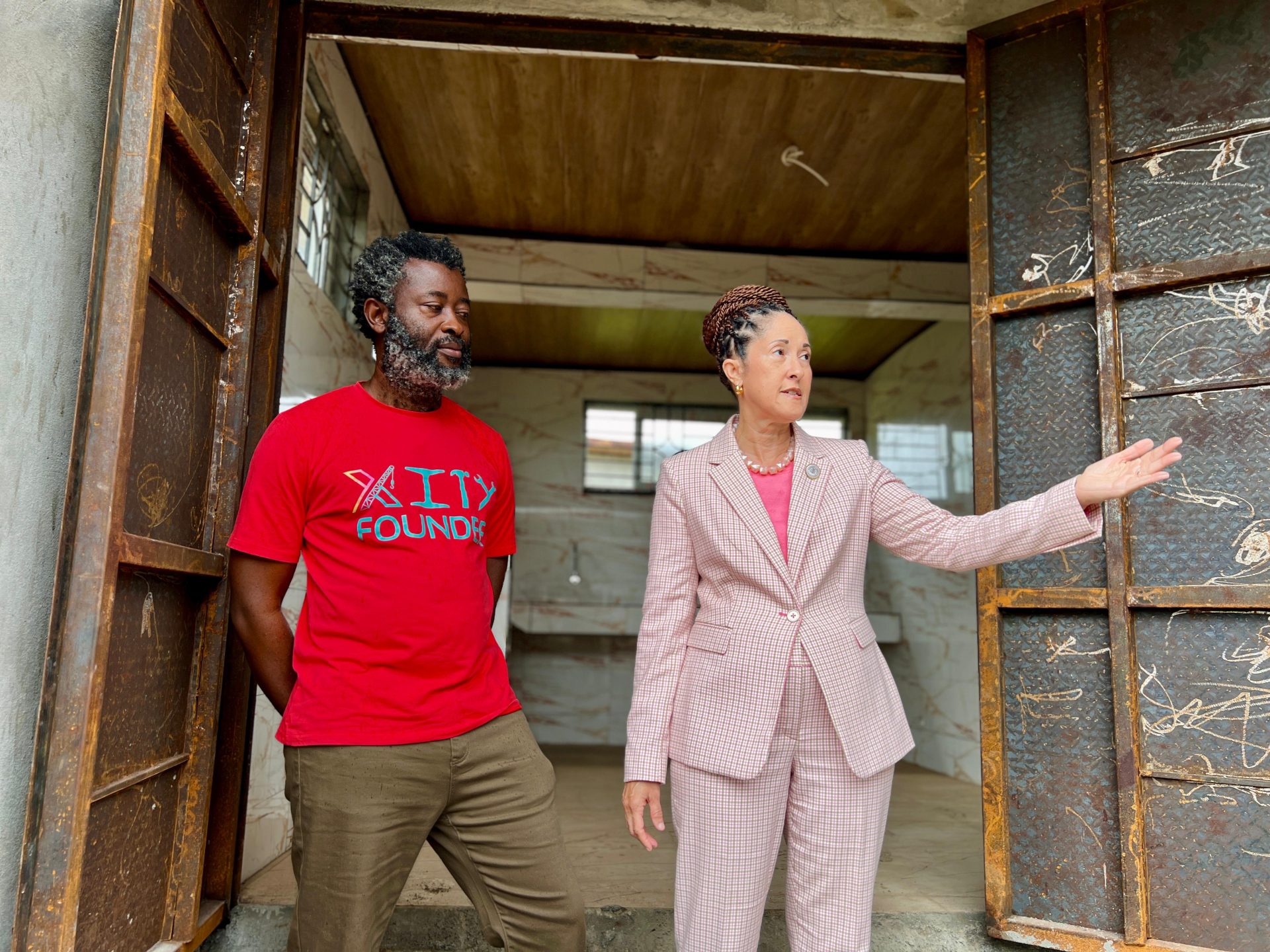
The result: The Solar Oasis Student Utility Park — an innovative, high-grade solar-powered complex that boasts two new restroom buildings with a total of 26 toilets and urinals: 12 toilets in the women’s building, and 9 toilets and five urinals in the men’s building. And both buildings are disability-accessible with entrance ramps and designated stalls.
Additionally, the complex also features a Mini Student Center with two additional bathrooms of its own, an indoor and an outdoor water fountain and a park.
The Solar Oasis Student Utility Park is UL’s first foray into solarization, and the utilization of renewal energy at the self-contained site will ensure 24/7 electricity, running water, sanitation and Wi-Fi. The $680,000 complex, situated on 1.5 acre on Fendall Campus, is slated to open December.
“The Solar Oasis is the first signature infrastructure project of this UL administration, and it reflects everything that we are about: addressing the needs of our UL community in a way that is innovative, sustainable, forward-thinking, aesthetically pleasing and scalable,” Dr. Maparyan said.
The construction will directly address the longstanding bathroom and sanitation needs on the campus with reliable solar power, and it will also provide free filtered drinking water; and create a crucial student hub, offering Wi-Fi, charging stations, printing services and space for study and connection.
Dr. Maparyan said the initiative could serve as a blueprint to eventually solarize all four campuses of UL— a move that could transform the university.
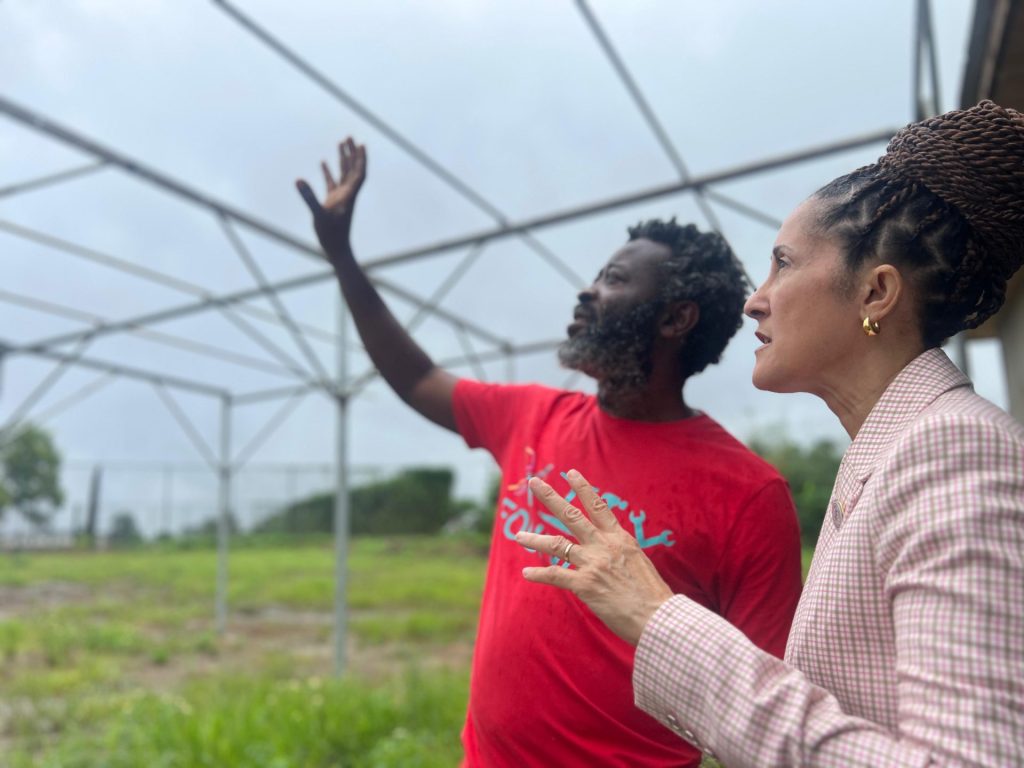
“The Solar Oasis was originally conceived as a renewable energy pilot project,” she said. “Our theory was that, if the Oasis was successful, we could think about scaling solar energy to other aspects of campus and, ultimately, solarizing UL’s entire operation.”
Furthermore, Dr. Maparyan said the project sends a powerful message about UL’s commitment to student welfare and student development: “We love you. We care about your future. We want your future to be good. We want you to thrive. We want you to prosper and to enjoy life. Things have been hard up to now, but they are going to get better. Watch the tables turn before your eyes. We are building the UL of tomorrow today.”
A Liberian-owned firm, run by an accomplished UL alumnus, is behind the project – designing, installing and building the complex. It’s also the university’s first new construction in decades.
UL student Thomas Theophilus Halliesaid the Solar Oasis Student Utility Park is far more than the construction of new buildings.
“It is a restoration of dignity, safety and a more conducive learning environment for students,” said Hallie, the immediate former Speaker of the University of Liberia Student Interim Leadership (ULSIL). “The Solar Oasis will fundamentally change the daily experience of students. With reliable electricity, WiFi, clean bathrooms, safe drinking water and study spaces, students will spend more time learning and collaborating instead of worrying about basic necessities.”
Hallie, a senior student, said “inadequate bathrooms, limited access to running water, and poor internet connectivity have negatively affected student life at the Fendall Campus.” And for female students, it has been worst.
“They have endured some of the greatest hardships,” he said. “There have been instances where, due to the lack of functional restroom facilities, some were forced to use nearby bushes, exposing them to criminal attacks, harassment and the loss of valuable belongings. That reality should never exist in a modern university.”
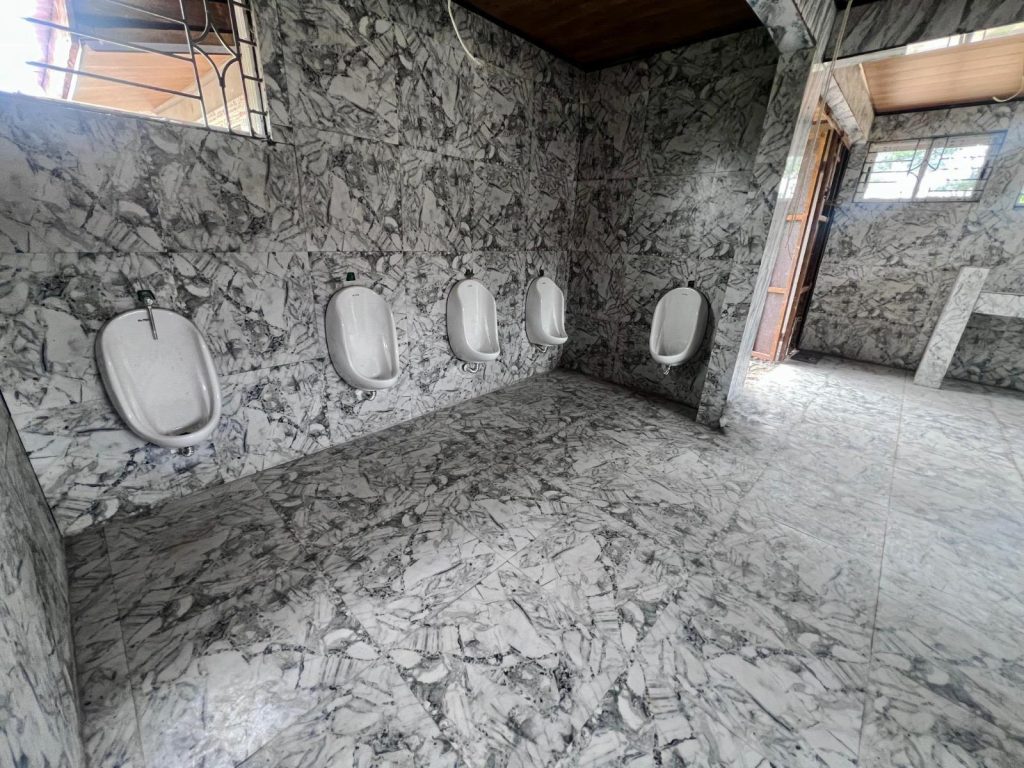
Finding a Lasting Solution to the Bathroom Crisis
Dr. Maparyan took office in January of 2025, and the UL community had had its fill of this longstanding problem. She quickly embarked on a search for a fix, but learned the problem was more involved than she thought, and it lay with the lack of a stable electricity supply. The Liberia Electricity Corporation, the primary provider of electricity in Liberia, has freely admitted that it cannot yet produce enough electricity in the country to meet the entirety of demand, so power has to cycle.
“I met a desperate need for bathrooms at UL and discovering that the problem was deeper than just sinks and commodes, but actually went deeper into the pipes, wells, pumps, and power systems that enable bathrooms to work, I searched for a solution that would bring relief and dignity to our community right away while also allowing us to pilot some new and durable ways to solve the problem,” she recalled.
During her search she was introduced Dr. Sannah Ziama, a former UL student, who had recently returned to Liberia after decades of advanced schooling and professional work as a physicist in academia and tech sector in the United States.He’s CEO of Xity Engineering Solutions, based in Johnsonville, providing solutions in commercial and industrial solar power.
“From there, we began to explore ways that solar power could be used to solve UL’s bathroom crisis and, ultimately, other energy problems as well,” she said. “So, consider the Solar Oasis Student Utility Park to be an experiment in sustainable energy and WASH solutions for UL.”
Dr. Maparyan added: “The fact that Dr. Ziama is a UL alumnus made this even more special. His passion for UL and Liberia compelled him to go the extra mile with every aspect of the project.”
Engineering a Solar-Powered Future
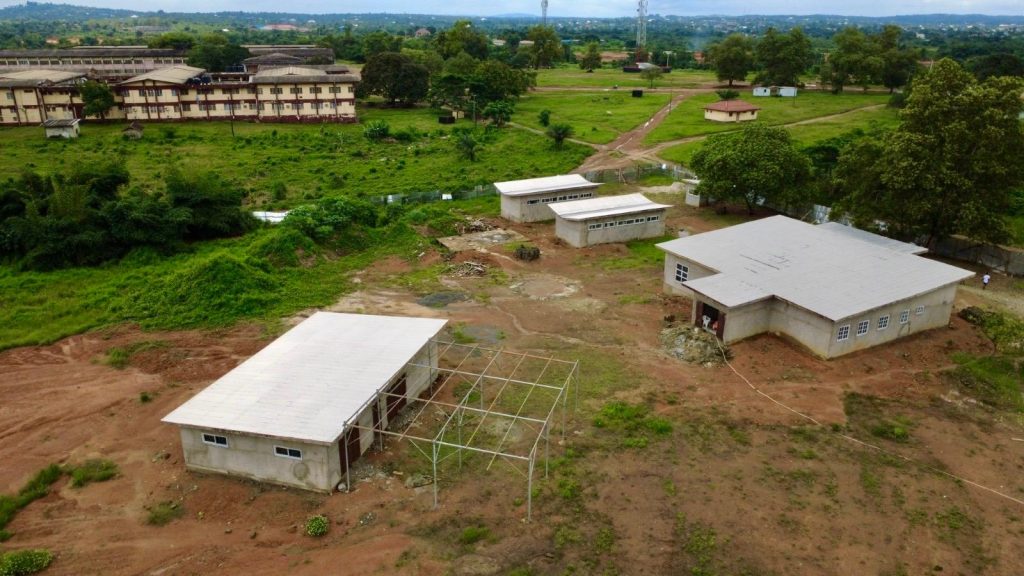
Dr. Ziama and his all-Liberian team began working on the project last October. The system he designed and commissioned has an advanced solar micro grid with top-of-the-line components and boasts a longer life span and capabilities beyond the systems typically installed in Liberia. The system is commercial and industrial grade solar, instead of the commonly used residential, and its solar panels can potentially generate excessive power, enough to sell to LEC; and its long-lasting battery can run the site for two days during inclement weather.
“Sustainability is one really inspiring part of this project,” Dr. Ziama said. “Water and energy are generated right on site through the borehole well and the solar power system. All the water that will be lifted out of the 200-feet well and pushed through filters and pipes will all be driven by solar-generated power. “
Dr. Ziama said “it ensures that the normal use of the toilets will not be interrupted by lack of power, and this in turn prolongs the life of pipes, eases the upkeep and maintenance of toilets, and the general sanitation of the bathrooms are kept in a good state.”
Dr. Ziama, who most recently worked as an AI scientist for Amazon, is familiar with the UL’s bathroom problems from when he was a student decades ago. He’s hopeful the new complex will have a positive impact and introduce a permanent fix.
“I suppose it has to first be established by the end users – UL students – that this project enhances their education experience,” he said. “If it does, and I hope it does, then it would align with one of the motivations for my relocation, and that is imparting knowledge and creating the right environment for knowledge sharing.” Dr. Ziama has integrated a few student interns from the UL College of Engineering into the project implementation.
The project experienced some delays due to the Middle East conflict, but Dr. Ziama and his team are in the last phase of the project, which entails landscaping the site, painting, installing the solar power system, the modern water fountains, completing the water distribution system, and a lot of testing.
“We must test our power and water to ensure that they support prolonged peak use,” he said. “We’ll do some crazy but cool stress/load tests and then if all goes well, we can then confidently turn over the project to the UL authority.”
A New Standard for Student Life
Once completed in December, the Solar Oasis Student Utility Park will be a game changer, improving student life in numerous ways, Dr. Maparyan said.
“First of all, there will be a clean and attractive centrally located bathroom complex on Fendall Campus able to serve the volume of users,” she said. “Since it is built with universal design principles, it will be accessible to all students, including those with disabilities—unlike older bathrooms on campus. Anyone can use it any time of day.”
Dr. Maparyan said maintenance of new and renovated facilities is a high priority for her administration. Three types of personnel will maintain the Solar Oasis: the Bathroom Brigade will keep bathrooms clean and well-supplied; Student Center attendants will maintain study areas and encourage students to tidy up; and Campus Security will promote careful, respectful treatment of all facilities.
“If anything breaks down, these attendants will be able to report it to Plant Operations right away for early repair or maintenance” she said. “With this system and the goodwill of all the students who utilize the facilities, I believe the Solar Oasis will remain a wonderful place for years and decades to come.”
As the project nears completion, student leader Hallie said it heralds a new benchmark for infrastructure development at UL, one that is innovative, sustainable and student-centered.
“To me and thousands of students, the Solar Oasis symbolizes hope, progress and a genuine investment in the future of higher education at the University of Liberia,” he said. “It sends a powerful message that students deserve an environment that supports both their academic pursuits and their personal well-being.”