

Fendall, Liberia (November 13, 2026) — The University of Liberia (UL) and the United Nations Development Program (UNDP) have officially launched the Prototype and Product Development Program – an initiative aimed at turning youth–led ideas into viable, market–ready businesses. The program is designed to bridge the gap between classroom theory and practical entrepreneurship.
Speaking at the launch ceremony at UL’s Fendall campus, UniPod Liberia Director Stephanie Wamah announced that 59 projects were selected from more than 90 applications for an intensive boot camp. The projects’ focus areas are health, engineering, agriculture, and digital technology. While last year’s program stopped at early prototypes, this year’s teams must build working, market-ready products and compete through several rounds of elimination.
“Following intellectual property training with the Liberia Intellectual Property Office (LIPO), teams will compete in a November 24 pre-pitch to narrow the field to 25 finalists. In December, the top 15 teams will each receive a $2,000 grant ($30,000 total) to register and launch their businesses” she said.
The project Director Wamah, said, “In Liberia, the challenge has never been ideas, “The challenge has always been a space to turn these ideas into reality… My vision five years from now is to see thousands of innovators come from the UniPod and do extremely well, creating jobs for others and empowering others through their innovation.”
Wamah added that UniPod is also expected to launch a pilot Future Leaders Innovation Club later this November for about 100 junior and senior high school students, offering First hands-on training in fabrication, textiles, and food value addition.
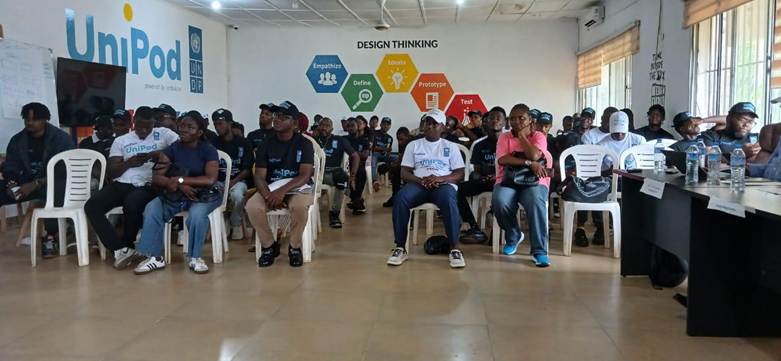
The Program is an initiative of the UNDP Continental Timbuktoo in partnership with the government of Liberia and private sector allies, including Orange Liberia.
University of Liberia’s Vice President and Dean for Student Affairs, Asst. Prof. Sayah Williamson Taylor emphasized the need to direct innovation toward UL’s agriculture program and rural communities. Williamson Taylor represented UL President Dr. Layli Maparyan at the program.
Williamson Taylor also wants the government to help finance the student projects, pointing out a student automated, touchless hand-washing system as an immediate public health tool that can be used across the Country.
Meanwhile, Officials from the Ministry of Commerce and Industry and the Liberia Intellectual Property Office (LIPO) pledged technical and legal support to ensure young creators retain ownership of their inventions.
A LIPO representative confirmed that the agency will provide intellectual property training during the boot camp and grant innovators access to its Technology and Innovation Support Center (TISC), a global patent database. Through Liberia’s ratification of WIPO and ARIPO treaties, prototypes registered locally can receive patent protection and market access across more than 180 countries worldwide.
“Let them give us a sample… and so the government can put that money up through the agency responsible in collaboration with the University of Liberia, UniPod, and Commerce.”
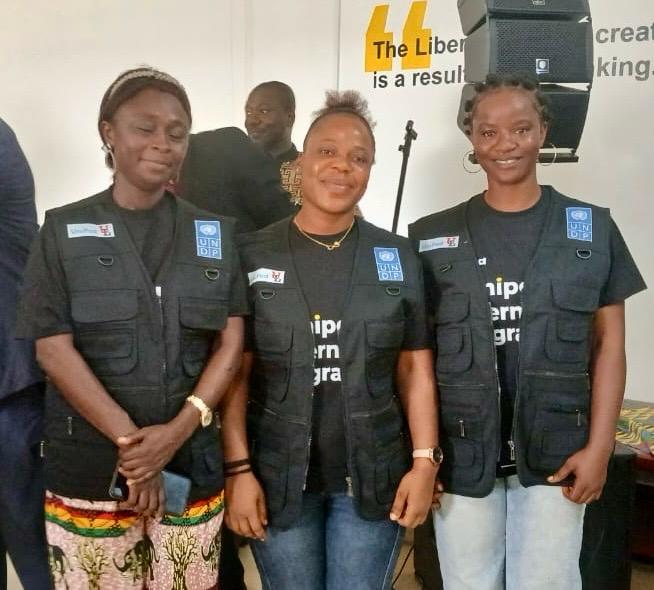
At the same time, the ceremony also marked the formal induction of 10 University of Liberia students selected out of 200 applicants for UniPod’s internship program, which started October 1. The 10 interns, including three female students, are currently gaining hands-on experience in artificial intelligence, graphic design, digital technology, and prototyping.
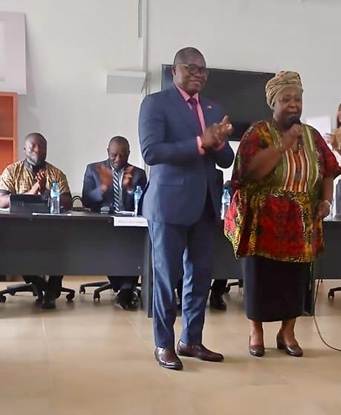
UNDP Deputy Resident Representative Louis Kuukpen commended the University of Liberia for the strong partnership and called for more women’s participation, noting that three female students among the 10 interns call for stronger female recruitment.
“We could have done better, and we can do better,” Kuukpen said. “Liberia must move beyond being consumers of technologies and products developed elsewhere to becoming creators, designers, and producers of solutions that respond to our own development challenges.”
Kuukpen also highlighted the rollout of the MineTech program, a specialized Timbuktoo initiative piloting in Liberia and five other African nations that pairs young engineers with experienced mentors to develop solutions for the mining sector.