
Sumo Charles D
- Posted on
- 394 Views
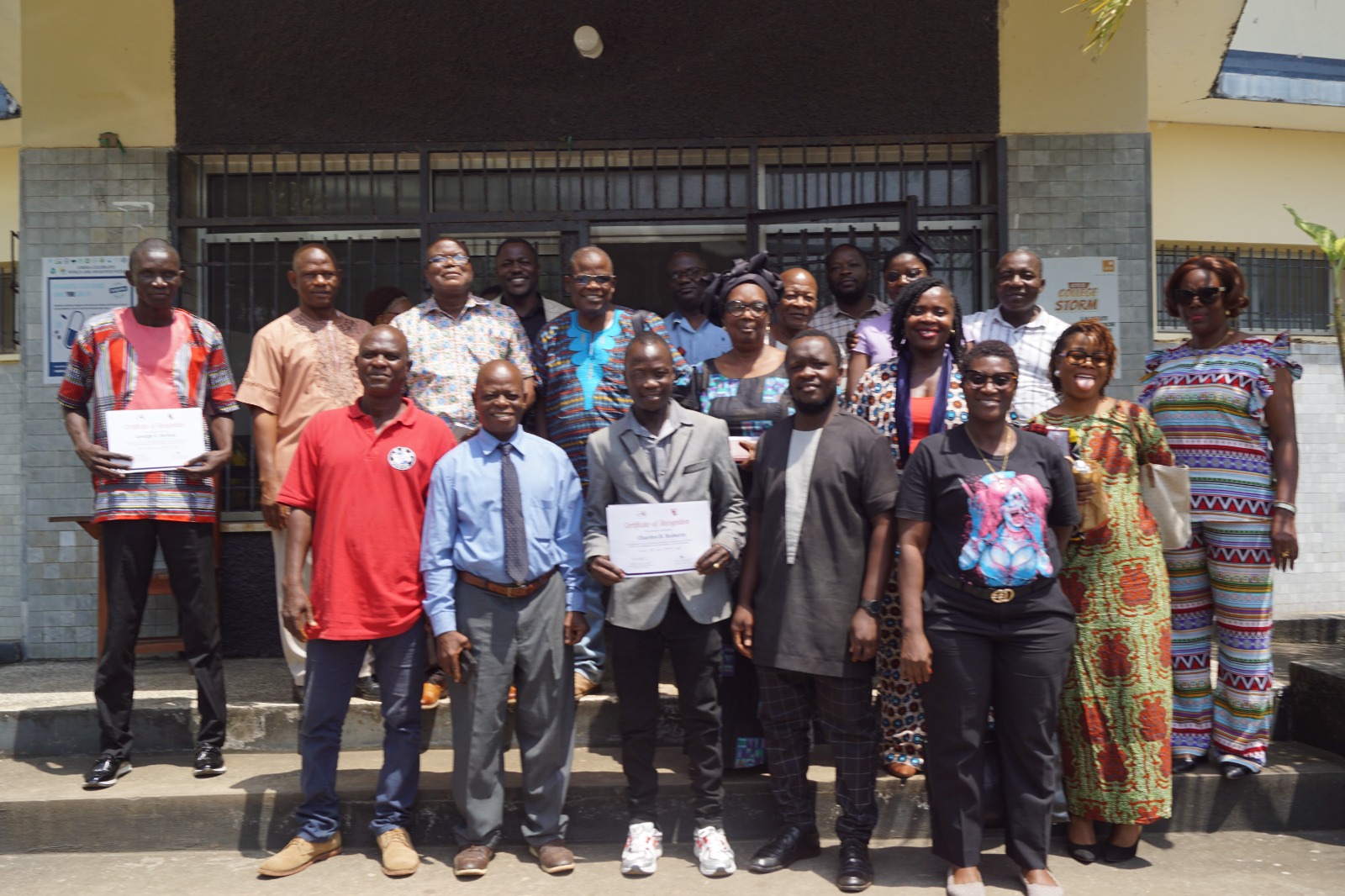
MONROVIA, February 18, 2026—The University of Liberia College of Health Sciences (ULCHS) has awarded certificates of honor to four rural teachers, recognizing their dedication to mentoring and guiding students, as well as their contributions to the nation’s future.
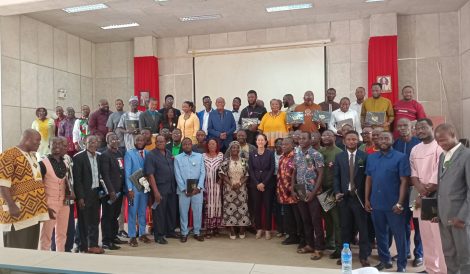
They were honored during the second ULCHS Teaching Day program held on Thursday, February 12, 2026, at the A.M. Dogliotti College of Medical Science in Congo Town. The honoring ceremony recognized the teachers’ outstanding dedication to teaching and learning, as well as their resilience in serving students in rural communities.
Those honored were Assistant Professor Fayia Francis Nyuma, who chairs the Department of Mathematics and Natural Resources at William V.S. Tubman University in Maryland County; Mr. George C. Sirleaf, Volunteer Science Lab Coordinator for LabNet in Bomi County; Mr. Simon H. Nyema, Instructor, Department of Mathematics and Natural Sciences at William V.S. Tubman University, Maryland County; and Mr. Charles Boimah Roberts, Sr., Volunteer Science Coordinator for LabNet in Grand Cape Mount County.
ULCHS cited Prof. Fayia Francis Nyuma for his work providing laboratory training and mentorship to West African Senior School Certificate Examination students across Maryland County, praising his promotion of safe and effective lab practices as the reason for the honor.
ULCHS also honored George C. Sirleaf for his work as a chemistry instructor at C.H. Dewey Central High School and as a master trainer for the Peace Corps Liberia’s National Science Teachers Training Program. He was also recognized for serving as a co-instructor at Camp xSEL, which stands for Excellence in Science Education for Liberia.
Camp xSEL is an annual summer science program for secondary school students recruited from across Liberia. In addition to covering content in biology, chemistry, physics, mathematics, English, and computer skills, Camp xSEL emphasizes inquiry-based learning, data-driven critical reasoning, data interpretation, and other foundational research utilization skills.
For his part, Mr. Simon H. Nyema was honored for his contribution to training laboratory personnel, mentoring students, and promoting safe and effective laboratory practices. He also served as a Camp xSEL LabNet program student in Maryland.
Additionally, Mr. Charles Boimah Roberts was honored for leading science training across Bomi, Grand Cape Mount, and Gbarpolu Counties. He has served as a master trainer for national Science, Technology, Engineering, and Mathematics (STEM) programs and a facilitator at Camp xSEL.
ULCHS created Teaching Day as a forum for educators, teachers, and policymakers to celebrate teaching achievements, confront challenges, share solutions, and develop innovative approaches—particularly for resource-constrained schools.
Ms. Sydell P. Goll, director of the Center for Teaching, Learning, and Innovation (CTLI) at the College of Health Sciences, said organizers chose courage over doubt and pressed ahead with Teaching Day after grant funding abruptly stopped last year.
“That decision reflected our resilience. This year, even without funding, we stayed here again because the feedback, the energy, and the impact of last year’s event reminded us that this platform matters. Teaching excellence is not dependent only on funding; it is driven by commitment first,” said Goll.
This year’s Teaching Day is celebrated under the theme “Teaching Excellence and Innovation, Celebrating Resilience, and Spotlighting Rural Teachers.”
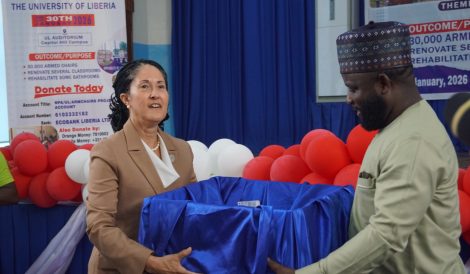
Serving as a lecturer during Teaching Day, Dr. Layli Maparyan, President of the University of Liberia, praised the College of Health Sciences and its leader, UL Vice President Dr. Bernice Dahn, for demonstrating strong leadership.
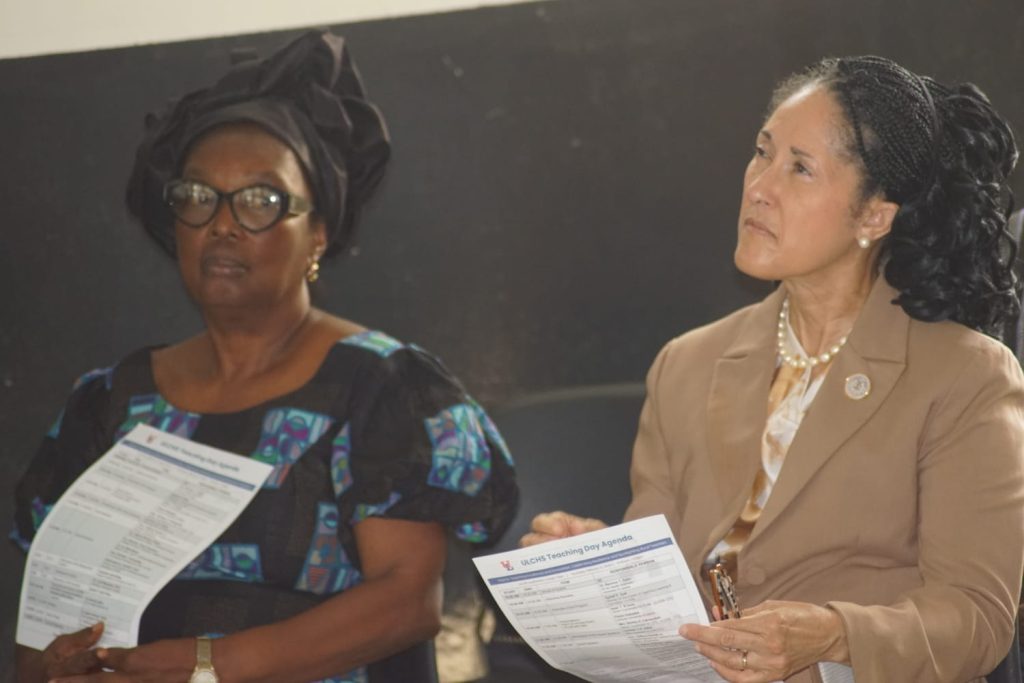
President Maparyan commended the CTLI for its vision and leadership in sustaining the tradition, saying Teaching Day is not merely an event on the university’s academic calendar but a statement of values.
“It affirms that teaching matters, that educators matter, and that the future of Liberia depends in no small measure on the quality, creativity, and commitment of those who stand in classrooms, often under the most challenging of conditions, shaping minds and molding character,” said Dr. Maparyan.
President Layli Maparyan said teaching excellence in Liberia is often expressed in far more profound ways, noting it can be found in lecturers who adapt complex concepts to limited resources without sacrificing academic rigor.
“When we think about that, for example, people who have to teach science with limited but important equipment and supplies. It is seen in the teacher who arrives early and stays late despite poor roads, delayed salaries, or overcrowded classrooms,” she noted.
Dr. Maparyan said excellence is shown by educators who teach not only subject matter but also values such as integrity, service, resilience, and hope. She added that true excellence, particularly in Liberia, is responsive to context—recognizing who learners are and where they come from.
At the University of Liberia, and especially within the College of Health Sciences, President Maparyan said teaching excellence carries extra weight because the college trains the nation’s future doctors, nurses, pharmacists, public health workers, and researchers—men and women whose competence and compassion will directly affect life and death, dignity and despair, and health and hope across the country.
President Maparyan reflected on the difficult conditions Liberian teachers have endured, saying they have taught through civil conflict, public health emergencies, economic hardship, and severe infrastructure constraints.
She added that teachers have taught in classrooms without electricity, under trees, in temporary structures, and often with limited materials.
“And of course, not to mention the rainy season and all the water it brings. Yet, they have persevered. Because of this, we pause today to celebrate that resilience, not as a romanticized struggle, but as a testament to courage, a testament to commitment, and a testament to calling.”
In rural Liberia, Dr. Maparyan said teachers are frequently the backbone of community development, educators, health advocates, peace builders, and role models. She noted that many work in isolation with minimal support, yet their influence extends across generations.
In recognition of these immense sacrifices, the UL President proclaimed that rural teachers are not invisible, nor forgotten. She assured them that their work is not in vain, announcing that the University of Liberia recognizes that strengthening education nationally requires bridging urban-rural divides.
“We must advocate for policies, partnerships, and programs that support rural educators through training, incentives, technology access, and professional networks.”
Dr. Maparyan believes that when investment is directed towards teachers, it benefits national resilience, promotes teaching excellence, and secures sustainable development.
Assistant Education Minister for Teacher Education Mr. Clifford Konah, Jr., serving as guest speaker, hailed teachers for demonstrating remarkable resilience amid infrastructural challenges, limited resources, and socio-economic hardship that often impede learning.
“Yet, they persevere because they believe in the transformative power of education. Achieving and maintaining teaching excellence requires continued professional development, access to modern pedagogical tools, and supportive policies that recognize and reward educators’ efforts,” said Minister Konah.
He noted that teaching is a noble profession, one that requires not just mastery of subject matter, but also a passion for nurturing young minds, a commitment to empathy, and a dedication to lifelong living and learning.
“Excellence in teaching extends beyond the classroom. It encompasses the ability to inspire, motivate, and empower students to become reasonable citizens and change agents in our society.”