
A2MEND Delegation Visits University of Liberia to Discuss Education Partnerships, Tourism, and Youth Mentorship
Monrovia, July 1, 2026 — A delegation from the African American Male Education Network and Development (A2 MEND) visited the University of Liberia on Monday, June 29, to explore partnerships aimed at strengthening educational exchanges, cultural tourism, and youth mentorship across borders.
According to A2 MEND, the visit is designed to convert shared educational ideals into concrete programs, including student exchange opportunities, mentorship pathways, and cultural initiatives that connect young people internationally.
It also builds on a broader engagement that A2 MEND said was sparked by Liberian President Joseph Nyma Boakai’s historic Peace Award ceremony, held at California State University in Sacramento, United States. A2 MEND described the event as part of its continued commitment to cross-border dialogue and fostering ties beyond formal recognition.
Capitol Hill campus tour follows talks with UL President
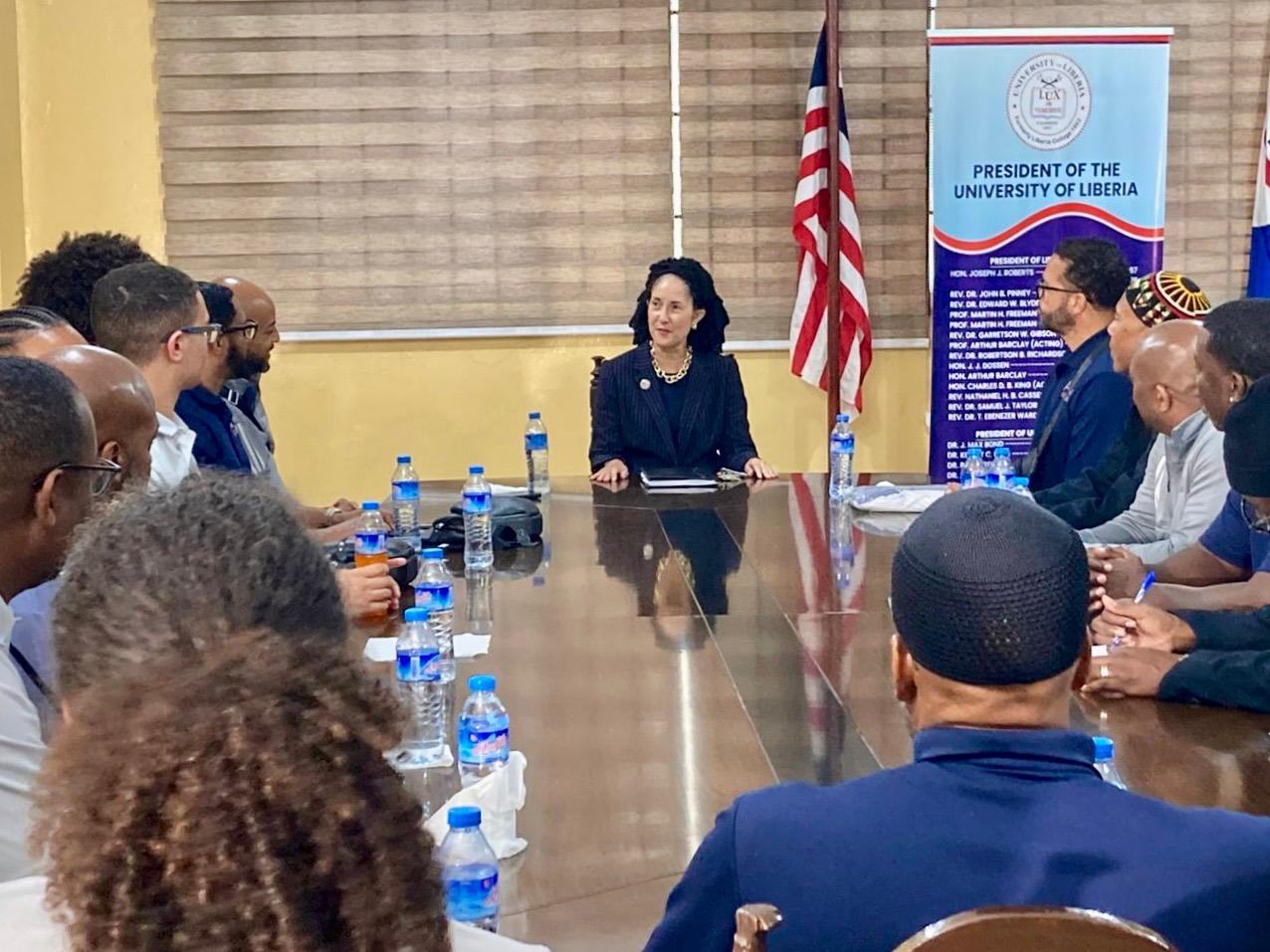
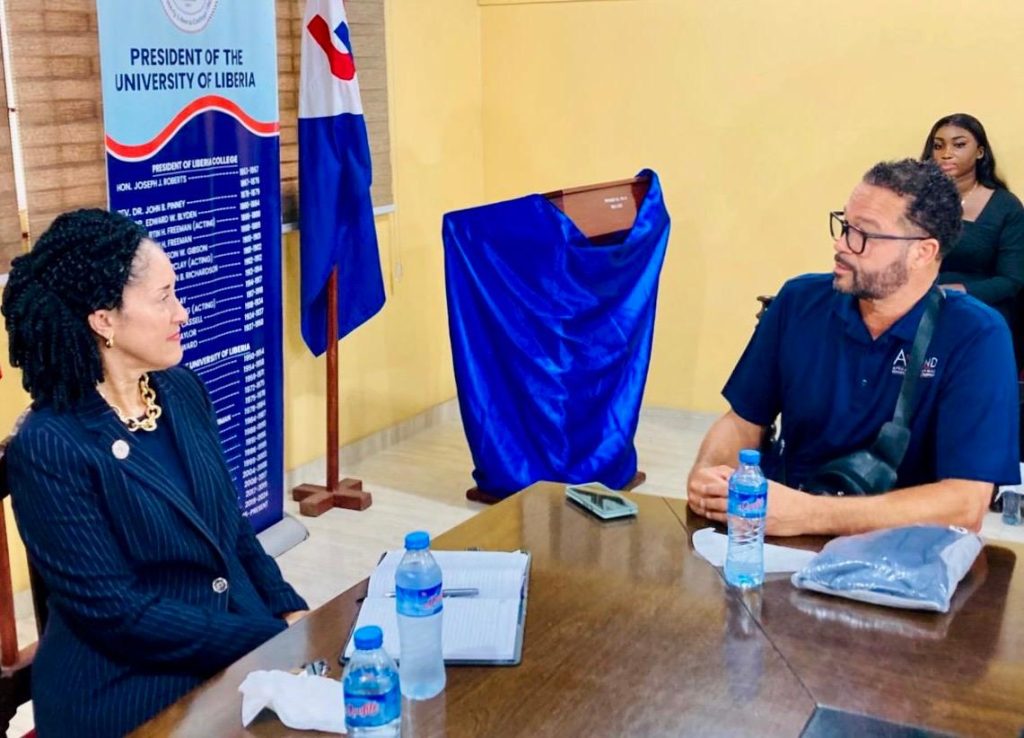
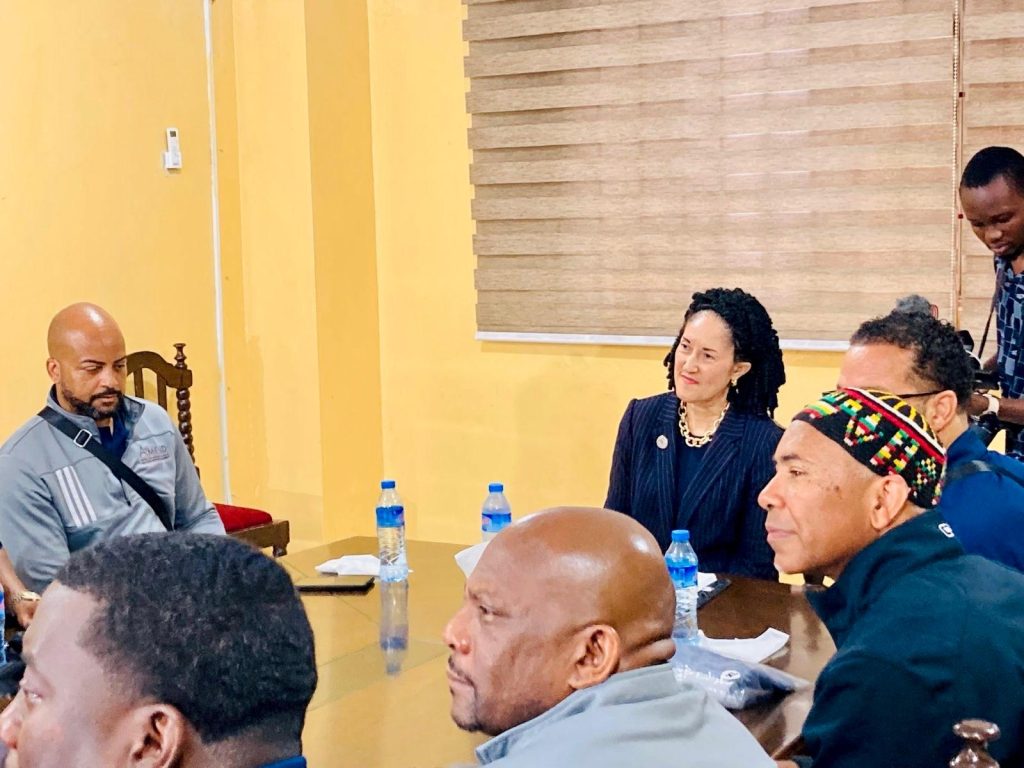
The group of about 20 African American men, including Liberian partners, met with University of Liberia President Dr. Layli Maparyan in a briefing session at the university’s Nathaniel Cassell building before touring the Capitol Hill campus.
The nonprofit organization led by Black male educators said it looked forward to a deep-dive conversation with university leadership on development opportunities, particularly in areas of educational exchange partnership, culture and tourism, and youth mentorship.
A focus on Liberia’s history, and why education matters now
From the outset, University of Liberia President Dr. Layli Maparyan shared her experience as both a professor of African American Studies and Women and Gender Studies. She recalled how she previously brought student groups from the United States to Liberia to study gender empowerment and gender mainstreaming under Liberia’s first democratically elected woman head of state, Ellen Johnson Sirleaf.
She said the initial cohort arrived as part of a structured, immersive academic and cultural learning model, visiting university institutions, meeting with government ministries, engaging with non-governmental organizations, and speaking directly with women across different communities to understand the ecosystem of actors working toward gender equality.
In a second cohort, she said the program became more research-oriented, with stakeholders interviewed and focus groups held to explore the possibility of establishing a gender studies program in Liberia.
Dr. Maparyan said the university, deeply affected by the country’s civil war, is strengthening its faculty capacity—moving, in her words, from what she described as a “master’s-centric” approach to a more PhD-centric model.
In practical terms, President Maparyan explained, that transition requires professional development opportunities for faculty, including advanced study placements through partner institutions.
Turning to resource constraints, Dr. Maparayn said the university still cannot reliably depend on 24-hour electricity, consistent seven-day water access, or campus-wide internet services, describing these as intermittent realities that affect teaching and research.
“In our five-year strategic plan,” she said, “we are focused on getting all those things in order rapidly.” She emphasized that such improvements must run alongside academic goals.
While she acknowledged the constraints, she said the institution wants to pursue global standards, expanded access to resources, and broader educational opportunities. For students, she added, exchanges also create social and cultural learning, including exposure to other students from the African diaspora in the United States and beyond.
“Even short-term trips are of value,” President Maparyan said, describing break-period travel and academic visits as opportunities to network, build relationships, and sustain professional growth over time.
Student abroad in Europe and building a broader African education network
A major question raised during the meeting involved how UL and A2 MEND might expand educational exposure for students who currently study abroad—particularly in Europe—and how to strengthen connections between African American students and the continent.
Dr. Erin Vines, A2 MEND Executive Director, described the educational objective of increasing African representation through dialogue about education and Africa’s future. He cited a goal of encouraging students to come back home to teach, lead, and run businesses, positioning return as a form of long-term development.
Dr. Vines proposed high-level academic conversations involving UL faculty and staff, potentially through visiting teams and guest participation in major conferences.
He referenced an upcoming conference scheduled for September 24 through October 3, with most sessions scheduled in Accra and two days in Cape Coast.
He indicated that the gathering’s purpose aligns with the delegation’s goal of exposing students to different realities, including learning from UL’s leadership and hearing personal journeys that explain what brought leaders to their work and how students can see themselves contributing from within Africa’s development landscape.
The delegation included Dr. Edward Bush, president and co-founder; Dr. Herbert English, treasurer and past president; Dr. Murrell Green, president-elect; and Dr. Amanuel Gebru, board member-at-large.
Other members named by A2 MEND were Dr. Walter Jones, Dr. Trevor Brackett-Lambey, Dr. Jeremy Hart, Dr. Dyrell Foster, Jamaal Brown, Dr. Terence Elliott, Adam Parker, and Alexander (AJ) Underwood. The delegation also included Amari Bryant, Elijah Jankowski, Gideon Telhun, Jordan Newman, Qwavario Ford, Timmy Tyson, and Darryl Johnson.